We will be going into depths about the extraordinary life of political activist & Nigerian musician Fela Anikulapo Kuti. This will be to celebrate his Grammy Lifetime Achievement Award on January 31, 2026.
Born Olufela Olusegun Oludotun Ransome-Kuti, the Afrobeats pioneer was born on 15 October 1938 in Abeokuta, Colonial Nigeria, to an upper-middle-class family.
He’d unfortunately pass away at just 58 years of age in Lagos, Nigeria, in 1997. However, it is important we highlight his life and what he stood for.
Family life:
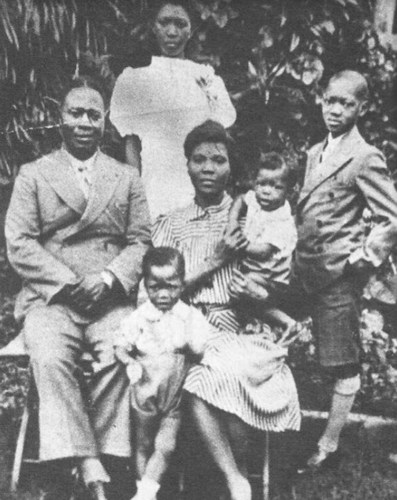
Fela was raised by his parents alongside his three brothers. His parents were Funmilayo Ransome-Kuti, who was an anti-colonial feminist, and his father, Israel Oludotun Ransome-Kuti, who was an Anglican minister, school principal, and the first president of the Nigeria Union of Teachers.
Both his parents played roles in the anti-colonial movement in Nigeria. Most notably, his mother led the Abeokuta riots in 1946.
His brothers Beko Ransome-Kuti and Olikoye Ransome-Kuti are both well-renowned medical doctors and were well known nationally, whilst not much is known about his other sibling, Dolupo Ransome-Kuti. Fela is also cousins with writer and fellow activist Wole Soyinka, a Nobel Prize for Literature winner.
His brothers and cousin are direct descendants of the musical pioneer Josiah Ransome-Kuti, an Anglican clergyman who is known for blending Christian hymns in Yoruba.
Early Life:
In 1946, Fela was introduced to music by his father and taught how to play the piano, as he believed studying music is an essential part of a good education. During this time, his mother became the inaugural president of the Abeokuta Women’s Union (AWU), where she campaigned to improve the trading rights of market women in Abeokuta.
In 1954, the “Zombie” hitmaker would meet his lifelong friend Jimo Kombi Braimah (known as JK), who was an occasional singer with trumpeter Victor Olaiya’s popular highlife band, the Cool Cats. Years later, Fela Kuti would describe JK as “the most important man in my life.”
Fela would leave Abeokuta for London, England, in 1958 to pursue music, although his parents hoped he’d become a doctor like his brothers, Beko & Olikoye, but his mother eventually obliges. In London, Fela fails his entrance examination for Trinity College of Music; however, the principal, impressed by his talent on the trumpet, allows him to retake the exam.
A year later, in 1959, Fela forms his first group, Fela Ransome-Kuti and His Highlife Rakers. The band records four sides for Melodisc, one of Britain’s first independent African and Caribbean music labels. Only one song was released (the A-side), which is a cover of Victor Olaiya’s hit.
The other two tracks, “Highlife Rakers Calypso No.1” and “Wa Ba Mi Jo Bosue,” are listed in surviving Melodisc paperwork but seem never to have been released.
Fela would disband the Highlife Rakers and form Koola Lobitos, which featured a line-up of West African and Caribbean musicians. The band would play in clubs popular with London’s Black community.
Relocating to Nigeria:
In 1960, Fela Kuti would marry his first wife, Remilekun (Remi) Taylor, with whom he had three children. He would move to the independent Federation of Nigeria, where he re-formed his band, Koola Lobitos.
The band was then renamed Afrika 70 as the content of his lyrics changed from love to social issues that were persisting in Nigeria. He’d later form the Kalakuta Republic, which would act as a commune, recording studio, and home for people connected to the band—which he later declared independent from the Nigerian state.
Kuti’s music was popular with Africans, let alone Nigerians. Because of this, he decided to sing in Pidgin English so that all Africans could enjoy his music. Although Fela’s music was popular with the people, it was unpopular with Nigeria’s military government. The Kalakuta Republic was the victim of consistent raids by the authorities.
In 1977, Kuti and Afrika 70 released the album Zombie, which heavily criticised Nigerian soldiers, using the zombie metaphor to describe the Nigerian military’s methods. The album was a massive success and infuriated the government, who raided the Kalakuta Republic with 1,000 soldiers. During the raid, Kuti was beaten mercilessly, and his elderly mother (who had contributed to the movement for Nigeria’s independence) was fatally injured after being thrown from a window.
The death of Fela:
Based on reports from his brother, Dr Olikoye Ransome-Kuti, Fela Kuti died at 58 years old from heart failure due to complications with AIDS. It is noted that Fela Kuti was an AIDS denialist.
Even though his brother stated the cause of his death on 3 August 1997, his untimely death is shrouded in mystery. Dede Mabiaku, a close friend and protégé of Fela, claimed in 2019 that Fela was poisoned by the Nigerian government during a detention by the National Drug Law Enforcement Agency (NDLEA), citing that Fela had expressed suspicion of being injected with something whilst in custody.
Former manager to the Afrobeats pioneer, Rikki Stein, also suggested that Fela’s death may have resulted from cumulative trauma from repeated arrests and beatings by the military regime, rather than AIDS alone.
Fela’s children also acknowledge AIDS as being the cause of death, although they were against the initial public announcement as they feared it’d damage his legacy. They decided to acknowledge the disclosure to help end persistent speculation about his passing.
Activism & Politics:
Kuti was vocally in opposition to Nigeria’s military regime and criticised the corruption of government officials. At the time, Nigeria was one of the most corrupt nations in Africa (and still is, unfortunately). During the 1970s, the government would stage rigged elections, and coups would be commonplace. Fela’s songs were a protest against the injustices faced not only in Nigeria but across Africa overall.
Due to being outspoken against the tyrannical regime, Fela would be arrested over 200 times and spent time in prison on multiple occasions. Soldiers would even be sent to beat him, his family, and friends, and would often destroy his music, records, and property in order to intimidate him.
In 1984, Fela Kuti would openly insult leaders such as Muhammadu Buhari (then president of Nigeria) in his song Beast of No Nation and called him an “animal in a madman’s body”.
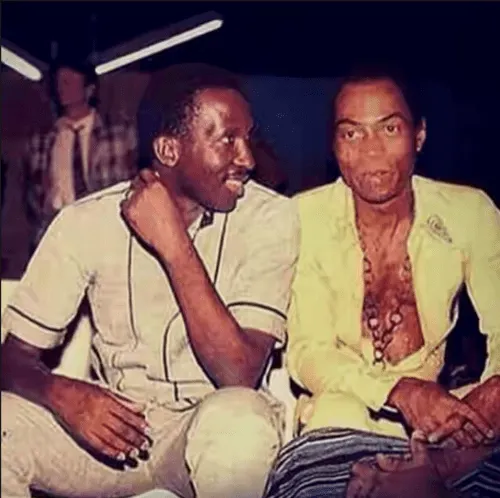
He was a staunch believer in Pan-Africanism and Socialism; In addition he was a supporter of iconic leaders such as Kwame Nkrumah and Thomas Sankara.
Accolades:
Fela Anikulapo Kuti didn’t win any major international awards during his lifetime. Posthumously his 1976 album Zombie was inducted into the Grammy Hall of Fame in 2025, with the award accepted by his sons, Femi and Seun Kuti.
On January 31st Fela Kuti will also posthumously be awarded with a Grammy Lifetime Achievement Award for his contributions to music globally, his activism and impact of on culture.